

Image credit : @bylukemiller via pexels.com
For decades, women’s elite ice hockey got boxed-in by this steady, four-year international cycle. And sure, the big, intense Canada vs United States rivalry gave everyone those huge, high-stakes moments at the Winter Olympics but in the “in between” years, the sport often couldn’t keep the commercial momentum going. Previous domestic pro attempts basically ran into the same issues, like scattered leadership and chronic underfunding, so elite athletes had to manage secondary jobs just to keep playing the game they really loved.
Then 2025–26 happened, and it pretty much ripped up that old setup. With the Professional Women’s Hockey League (PWHL) taking off in structural, financial, and cultural terms plus a very historic Olympics showcase in Milano Cortina, women’s hockey is now seeing a real jump in commercial performance numbers and institutional visibility, not just short-lived buzz.
The Million-Fan Milestone: PWHL’s Regular Season Triumph
The clearest sign that women’s hockey moved from being a local side-interest into a true top-tier entertainment product is regular-season attendance. In its just-finished regular season, the PWHL expanded its schedule matrix and continued growing its footprint across major North American markets.
The payoff from that expansion was pretty wild. The league crossed the million-fan mark in cumulative attendance significantly faster than many early projections had anticipated, while average per-game attendance also climbed year-over-year.
Even more than the raw totals, the league proved it can scale its brand into major, traditional “big room” venues, largely through the Takeover Tour concept. Large crowds at marquee arenas across the United States and Canada reinforced the idea that the audience is concentrated, loud, and ready to commit to major-league presentations.
And then you add the arena crowd milestones in markets like Seattle and Ottawa, and it’s pretty obvious the audience is engaged and continuing to grow.
Milano Cortina 2026: The Global Broadcasting Eclipse
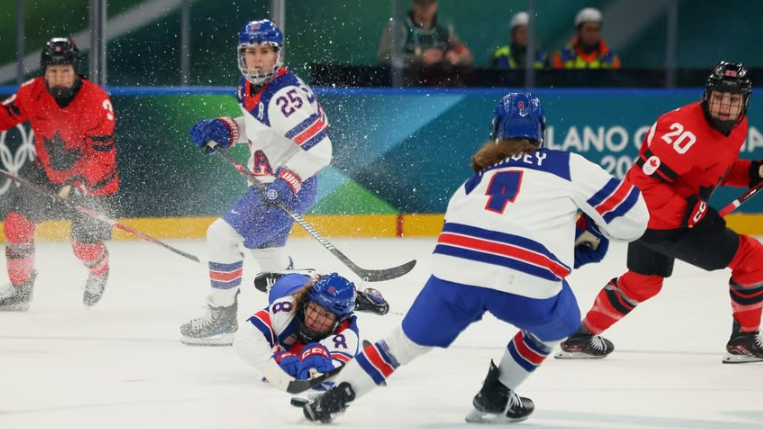
Once the PWHL built a nightly, sustainable domestic base, the international stage did what it always does: it pulled in the cross-continental broadcasting numbers that get noticed at corporate board tables. The women’s ice hockey tournament at the 2026 Winter Olympics in Milano Cortina became one of the biggest digital and streaming moments in women’s winter sports.
The final was an emotional gold-medal rematch, with the United States beating Canada 2–1 in a sudden-death overtime period. The broadcast essentially put well-known PWHL stars like Hilary Knight and Marie-Philip Poulin in front of a worldwide audience. That visibility helped reach casual sports consumers who hadn’t really followed women’s hockey before.
Digital Accessibility and the Grassroots Explosion
A huge reason the momentum feels more stable than past versions is calculated access, plus real structural funding. Backing the whole model, the PWHL leans on the financial infrastructure of the Mark Walter Group, letting the league provide fully guaranteed, live-able salaries, medical support coverage, and a modern collective bargaining agreement. In other words, players can treat hockey as a true full-time profession rather than a side project.
At the same time, the league knocked down traditional linear barriers by streaming regular-season contests free on YouTube. That decision sparked a major increase in live digital viewership, with fans showing up from countries all over the world.
And the success at the top created this immediate, downward “down-funnel” effect reaching the grassroots level. USA Hockey has continued reporting strong growth in female participation across youth and adult divisions. That result suggests the visibility of high-level modern competition is actively cultivating the next wave of future stars. So, the cycle isn’t just repeating anymore. It’s expanding.
About the Author