Image credit : @stadiumvagabond via instagram
There’s ordinary sports noise, and then there is that acoustic violence, you know, from a playoff hockey crowd. Since the whole thing is tucked inside those tight, heavily insulated indoor arenas, the collective roar of thousands of yelling fans turns the place into this physical pressure cooker, like the air itself is pushing back and when a whole stadium pops off at once after a huge goal, the volume can end up higher than the decibel level of a military jet lifting off right nearby. Across the hockey world, a handful of famous games and legendary buildings really come to mind, because the vibes are so thunderous they actually seem to shift the rhythm on the ice.
Florida Panthers Make History at Amerant Bank Arena
South Florida used to be quiet for hockey, but the Florida Panthers’ deep championship runs have redrawn that map, completely. During Game 3 of the Stanley Cup Final, the home crowd pulled off something that hasn’t been done the same way before. In the second frame, forward Sam Bennett jammed a loose puck in net to put the Panthers up 3–1, and the whole arena went off. At the same time, the team’s goal horn had some malfunction and didn’t sound, so the fans filled the gap with pure lung power, and local readings clocked an ear-splitting 130.9 decibels, on the meters right there. That roar wasn’t just loud, it broke a record—loudest crowd roar ever logged for an indoor sports event, and it went past that uncomfortable pain threshold, officially.
The Majestic “Habs Fever” Inside Montreal’s Bell Centre
If we’re talking sustained, raw stadium acoustics, the Montreal Canadiens fanbase carries this historical weight that’s hard to match. The Bell Centre uses steep, vertical seating bowls, designed to hold sound, then send it right back onto the ice, like echo on purpose. In a brutal playoff grind against the Buffalo Sabres, the vibe climbed into that legendary territory people reference forever.
Even opposing skaters mention how the Montreal faithful’s natural singing, rhythmic chanting, and constant screaming forms a “feedback loop” of momentum, making it nearly impossible for visiting teams to settle down, especially before the first television timeout. Unofficial spikes at the Bell Centre regularly clear 120 decibels, so it gets treated like the spiritual home base of hockey volume.
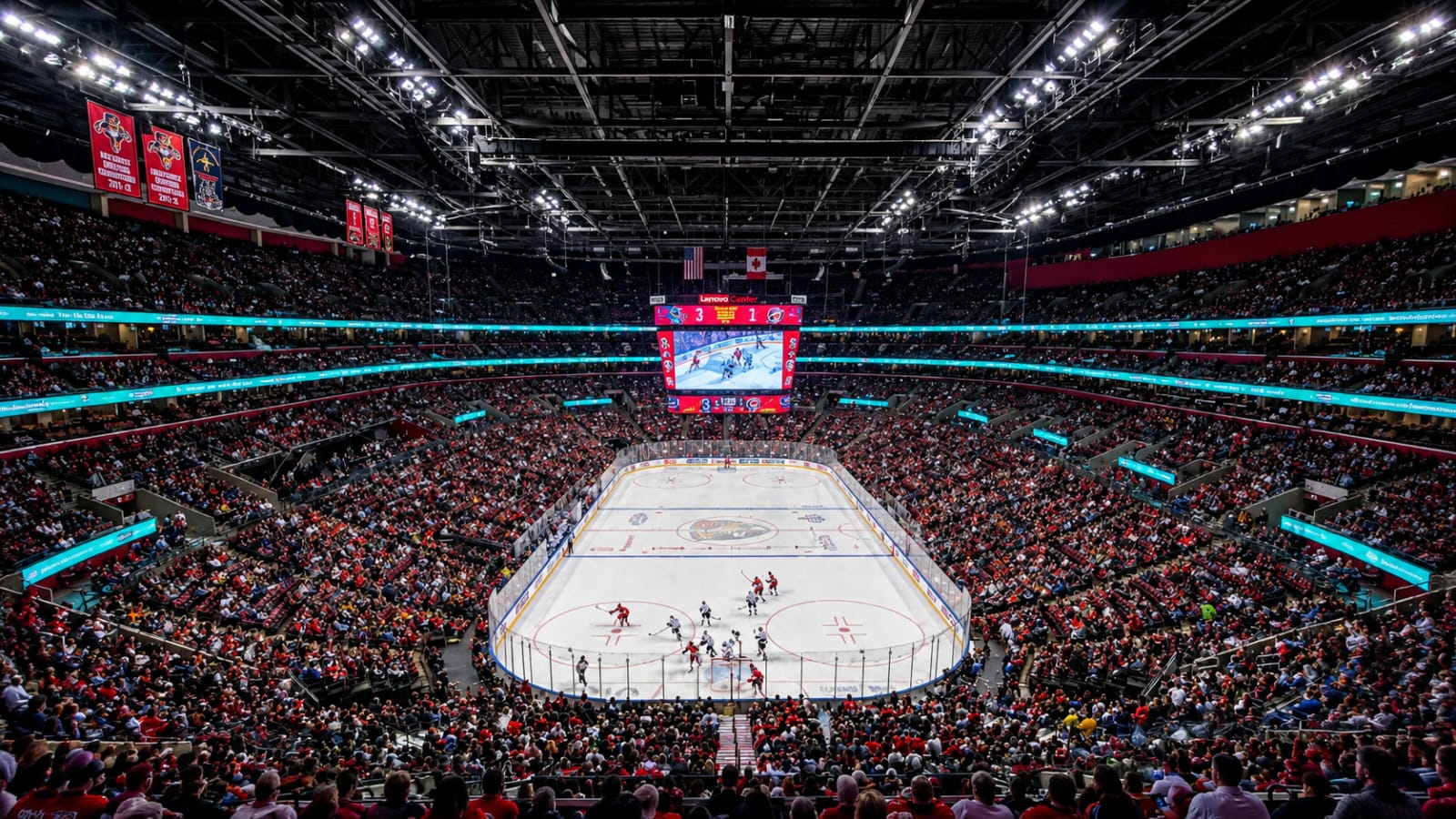
The Lenovo Center: Carolina’s “Loudest House in the NHL”

The Carolina Hurricanes have turned Raleigh into one of the most hostile road spaces around, for pro sports. Visiting players have, lovingly, called the Lenovo Center the “Loudest House in the NHL.” It hosts sellouts full of passionate “Caniacs,” who act like every night is sudden-death elimination. In one huge playoff battle vs the Washington Capitals, stadium audio trackers noted that pre-game player introductions climbed above 106 decibels, before any puck even dropped,and when Warren Foegele scored a key goal to shatter a scoreless deadlock, the eruption that followed hit 113.2 decibels, creating a wall of sound that opposing skaters describe like a psychological nightmare to skate through.
Nashville’s Smashville Eruption (2017 Western Conference Finals)
Before Florida took the newer modern spot for decibel dominance, the top standard for pure, organic fan noise belonged to Bridgestone Arena in Tennessee. During Game 6 of the 2017 Western Conference Finals, the Nashville Predators were right there, close to locking in their first trip to the Stanley Cup Final ever and the city turned the whole thing into this chaotic, southern-fried hockey carnival and every whistle got answered by coordinated, deafening chants aimed at the opposing goaltender, and when the final horn hit to seal the historic win, the decibel meter climbed to 129.4 decibels. That volume didn’t just impress people, it shook the concrete in downtown Nashville and left a benchmark hockey team spent about a decade trying to actually equal, or at least get close to.
The Acoustic Reality: For comparison, typical live rock concerts hover around 110 decibels, while human eardrums start taking immediate injury at 130 decibels. The fact that modern hockey crowds are regularly cutting through those limits shows that playoff energy is, in a real sense, unmatched across global entertainment.
About the Author