
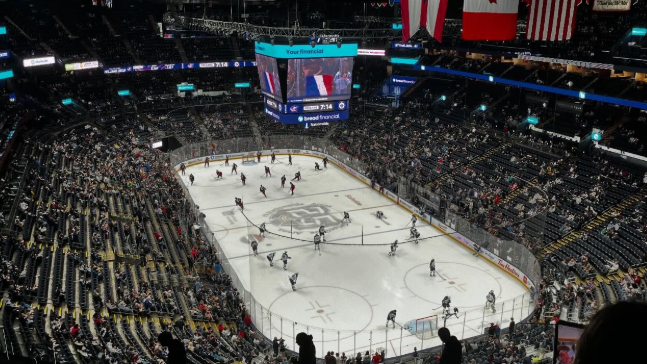
Image credit : @buffalojrsabres via instagram
International hockey championships, you know the way they’re built and how visible they are globally, kind of acts like the main engine for the sport’s economic growth, technical evolution, and this whole cultural spread thing. As of May 2026, the move from those kind of isolated regional meets into a steady, data-leaning global calendar has basically changed how people watch and how they play both ice hockey and field hockey, and yeah it’s not just about the shiny trophy anymore. It’s more like the tournaments are planning tools now, they steer long term stability and try to pull in the mainstream crowd, even when the games are over.
Economic Catalysts and Regional Infrastructure
Big championships, they work as economic drivers, and a lot of this is pretty visible in the 2026 IIHF World Junior Championship in Minnesota. An official impact analysis, released in April 2026, said the tournament brought in $71.5 million of overall economic activity for the region. That same report also pointed to 385 jobs supported and $4.8 million in local tax revenue. But beyond the quick spending, these events also “prove” why cities should build serious venues.
Like the BCF Arena in Fribourg, which recently hosted the IIHF Men’s World Championship. This so-called “Olympic-legacy” approach keeps the infrastructure high performance for a long time after the last buzzer , which lowers the wall for local youth to step in and it can even help future professional league expansions.
The Surge in Inclusivity and New Fan Bases
The 2026 Winter Olympics in Milano Cortina ended up being a turning point for women’s hockey, almost like a cultural ignition, and it has now rolled into both college and pro levels and after the Olympics, women’s college hockey reportedly climbed 21% in ticket revenue, and merchandise sales went up more than 100%. A part of that rise feels connected to storytelling shifts, where top tournaments get wrapped in streaming narratives and personality-led content.
When championships spotlight identities and rivalries tied to stars like Hilary Knight and Caroline Harvey, international events have been able to hook a younger , more varied audience. Then casual watchers don’t just drift away; they turn into active fans and year-round consumers, which is kind of the whole point.
Tactical Innovation and the “Triple Gold” Ambition
When nations meet internationally, tactics have to move fast. Every program wants to out-think the strongest systems, so evolution is basically mandatory. The 2026 IIHF Men’s World Championship in Switzerland brought the “Triple Gold Club” talk right to the front, with players like Matthew Tkachuk aiming for that rare set of trophies: Olympic gold , World Championship gold, and a Stanley Cup. Under that kind of pressure, the sport keeps leaning into something more analytical.
Data from the 2026 Wharton High School Data Science Competition highlighted this momentum, showing analysts using simulated tournament data to forecast results from high-danger scoring moments and puck-tracking indicators. It mirrors that real-world shift toward data-heavy coaching plus recruitment decisions, not just “traditional scouting” vibes.
Global Expansion Through Alternative Formats
The International Hockey Federation (FIH) has tried to broaden the game by using condensed styles like Hockey 5s and in 2026, Hockey 5s showed up in regional championships and developmental programs in places such as Nepal and Bolivia, and the whole idea is that it lowers the starting threshold for newer hockey markets.
These shorter, smaller-court versions are built for dense cities and for higher broadcast energy, so the sport can expand even where there isn’t the usual infrastructure for full 11-a-side field hockey, or where ice rinks are basically limited. By diversifying the tournament lineup like this, governing bodies are also kind of future-proofing the sport, because the global entertainment space is crowded, and you have to adapt or you get crowded out.
About the Author