
Image credit : @reds via instagram
Identifying the most dominant teams in hockey history requires a dual focus on statistical outliers and the longevity of competitive supremacy and from the state-sponsored “Big Red Machine” of the Soviet era to the dynasties of the NHL’s Original Six and post-expansion years, dominance is measured by a team’s ability to maintain a high winning percentage while consistently securing championship titles under various competitive structures.
The Soviet Union’s “Big Red Machine” (1963–1990)
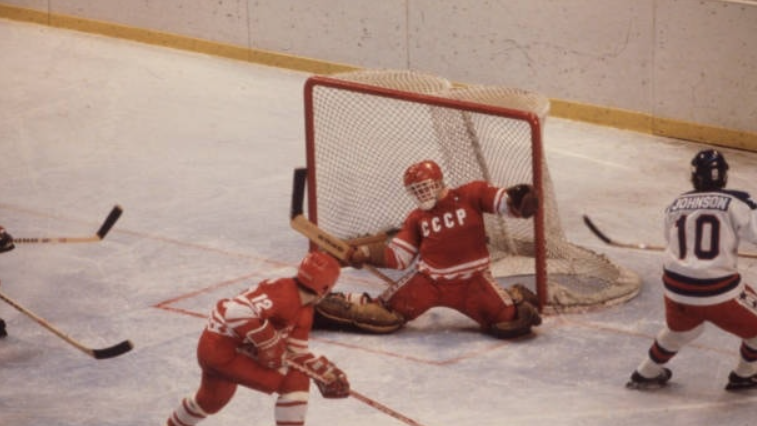
The USSR national side, if we’re being real, is maybe the clearest example of concentrated dominance in international hockey. From 1963 to 1990, the Soviet Union won 22 IIHF World Championship titles, and also took home seven Olympic gold medals. Their whole approach was built on year-round conditioning and this “symphonic” style of play, where the whole unit moved the puck as one idea, rather than letting individual players drift into isolation.
At the 1956 Cortina Olympics, the Soviets announced their arrival by outscoring opponents by a staggering 5-to-1 ratio in the final round, surrendering only five goals across the entire medal stage. It wasn’t just a win; it was a total defensive lockdown that redefined international play. Their toughest stretch, though, showed up in the 1980s, with the “Green Unit” line around Larionov, Makarov, Krutov, Fetisov, and Kasatonov; that group kept a tactical unity that often just buried NHL-level opponents in elite matchups, like Canada Cup showdowns, where it was best-on-best everywhere, not just in theory.
The Montreal Canadiens Dynasty (1975–1979)
On the pro side, the 1976-77 Montreal Canadiens get talked about as the most dominant single-season team ever in the NHL and in that year, Montreal put up a 60–8–12 record, landing at 132 points, and it checks out as the top points percentage (.825) across an 80-game schedule. The team also had nine future Hockey Hall of Famers, and Guy Lafleur was doing the most damage, scoring 136 points to lead the whole league.
Meanwhile, Ken Dryden, in net, basically steadied the defense so hard that they surrendered only 2.14 goals per game. A lot of people stress this wasn’t a one-off miracle, but the peak of a four-Stanley-Cup-in-a-row run, where they outpaced the league in both forward production and defensive structure.
The Edmonton Oilers Offensive Juggernaut (1983–1988)
Then the 1980s Edmonton Oilers came along and shifted dominance into pure scoring volume, like the game was being pressed in real time and they were led by Wayne Gretzky, and by Mario Lemieux’s chief near-peer, Mark Messier. In 1983-84 the Oilers scored 446 goals in a single season, which is still remembered as an NHL benchmark. Their defense wasn’t always the headline, sure, but their ability to “out-skill” opponents same idea, different phrasing meant the results still piled up.
They captured five Stanley Cups in seven years, which is a pretty loud sign of sustained control. The 1986-87 lineup is often described by analysts and former players as the most complete group ever built, with seven Hall of Famers and a power play that ran with almost unreal efficiency. That kind of dominance basically forced the NHL to rethink things, and it fed into the later, more structured “neutral zone trap” style that became a real thing in the 1990s.
The USA-Canada Women’s National Team Rivalry (1998–2026)
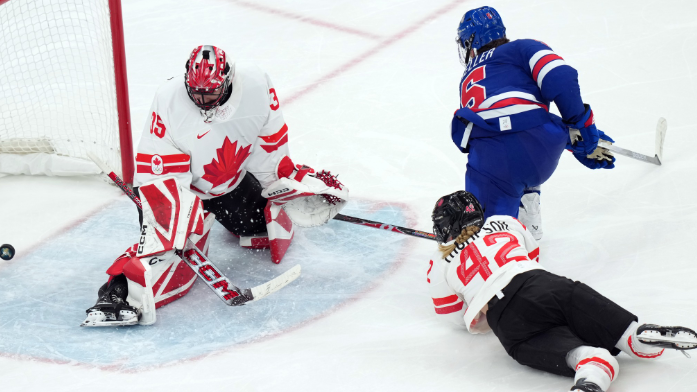
For women’s international hockey, dominance looks like a two-team lock, a kind of duopoly that keeps repeating between the United States and Canada, since the sport debuted in the Olympics in 1998, those nations have claimed every gold medal that was handed out and Canada used to lead the scoreboard with five Olympic golds, but lately the U.S. has flipped the pressure, taking seven of the last nine World Championships.
Most recently, in the Milano Cortina 2026 Games, the U.S. women showed this kind of peak tactical superiority, including a 100% penalty kill efficiency and a .984 tournament save percentage. This rivalry is unusual, because it’s dominance in a slightly different shape: two teams have, in practice, pushed the rest of the world off the podium for nearly three decades. That created a measurable gap between the top pair of contenders and everyone else, and it feels pretty unmatched in modern team sports, at least in terms of how consistent the separation has been.
About the Author