Image credit : @Denver7News via facebook
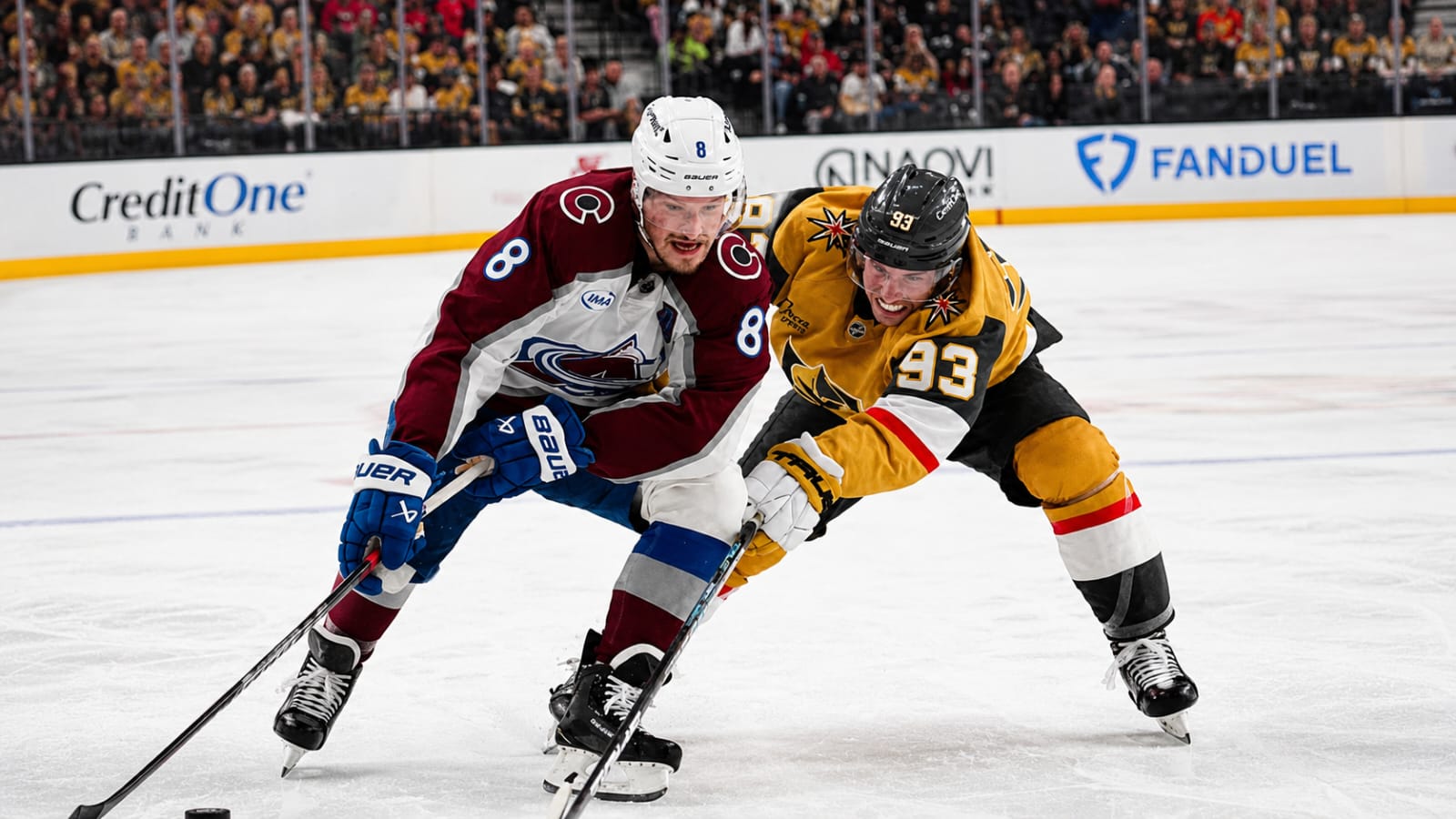
The Vegas Golden Knights have messed with the Stanley Cup Playoffs, rolling straight into Denver and somehow pulling off a road sweep against the top-seeded, Presidents’ Trophy-winning Colorado Avalanche. This super lopsided push doesn’t feel like random puck luck to me, it reads like an identity-first hockey blueprint built by John Tortorella. With a super restrictive, low-event type tracking approach Vegas has fully locked down the most dangerous transition rhythm in modern sports and turned it into a structural sledgehammer over everything else.
The Suffocating Blue-Line Insulation

Colorado’s core, their multi-year juggernaut thing, has always been that terrifying, front-to-back transition speed. When guys like Nathan MacKinnon hit the center red line with open ice, they weaponize lateral spacing, slicing through defensive zone tracking in a blink. Vegas has answered that whole formula by putting up a brutal, physical wall press that straight-up denies entry into the neutral zone.
Instead of giving ground and defending their own blue line, Vegas’s defensemen, powered by the stellar tracking of Noah Hanifin and Rasmus Andersson, are stepping up with this nasty aggression. They’re forcing immediate, soft-tissue turnovers right at the source, cutting off the horizontal passing lanes before the Avalanche can even get their explosive top-six cycle going. When Vegas clogs the middle and makes Colorado do a slow, predictable dump-and-chase routine, the favorite loses their main offensive personality completely.
The Absolute Flat-Lining of Carter Hart
Even the best system, when it’s tight and disciplined, will still let a few high-danger looks leak through now and then. And when those breakdowns happen, the Golden Knights have gotten an absolute goaltending masterclass from Carter Hart. After the heavy mental pressure of the Western Conference Final, Hart has been running with this almost emotionless flat-line mode.
Hart followed up a strong opening-night showing by stopping 29 of 30 shots in Game 2, and that came with a staggering .967 save percentage across the road block. With Colorado’s star defenseman Cale Makar sidelined, Hart has been excellent at reading screened point shots and smothering the secondary rebound chances the moment they appear. His steady calm in the crease gives Vegas that top-tier psychological armor, so they can lean into the heavy, physical brand without the constant anxiety that one mistake could swing the whole game.
The Deep, Interlocking Bottom-Six Matrix

Championships tend to get decided when an organization’s secondary depth layer can actually tilt the ice, and Vegas’s bottom-six forwards are currently controlling the postseason’s physical tempo. Tortorella has rebuilt the whole fourth-line assignment, turning role players like Keegan Kolesar and Nic Dowd into real specialized defensive tools.
Rather than just burning minutes and giving the top-line scoring guys some air, this depth group is actively grinding down Colorado’s top defensive pairings. They’re running a relentless five-man forecheck, finishing every body check without hesitation, and keeping puck control locked in along the boards. By holding the game pinned deep in the Avalanche zone for long, grinding cycles, Vegas’s unsung guys are draining the opponent’s emotional, plus physical reserves. And then when Jack Eichel and Ivan Barbashev come back onto the ice, Colorado is left exposed to that decisive scoring punch when it matters.
About the Author