
Image credit : @romeoentgroup via instagram
Even though fans usually look at hockey tournaments as a nonstop blur of speed , overtime drama , and sheer intensity. League executives tend to see something else, more like a wide financial blueprint. Under all that ice-time and noise, there’s a big business setup meant to hold on to audience attention , raise franchise worth ,and reduce financial risk using a mix of revenue sources that aren’t all coming from the same place.
A “successful” tournament, in real terms, is about juggling high-cost operations with steady diversified income. In today’s sports economy, a handful of business frameworks quietly steer whether top hockey events in different countries actually thrive financially.
Hockey-Related Revenue And Gate Income
At the core of most professional hockey economics sits Hockey-Related Revenue, or HRR and this covers earnings linked to league and game activity, like ticket sales, playoff gate takings, merchandise, food and beverage concessions, parking, sponsorship inventory, and premium seats.
Gate revenue stays particularly big during postseason play, when demand jumps quickly , and teams can charge higher ticket prices because playoff pressure feels heavier and fan loyalty is already built up over years.
To keep arenas more profitable, teams also lean into luxury suites, executive club seating, and private hospitality spaces. These premium experiences often bring in high-margin cash that helps tournament operations stay steadier even if regular season ticket demand feels unpredictable.
This also feeds into league economics in a direct way. Salary-cap systems, including the NHL’s, are tied to Hockey-Related Revenue figures. So, strong attendance and dependable gate income become a kind of financial stabilizer for the long run.
Broadcast And Streaming Rights
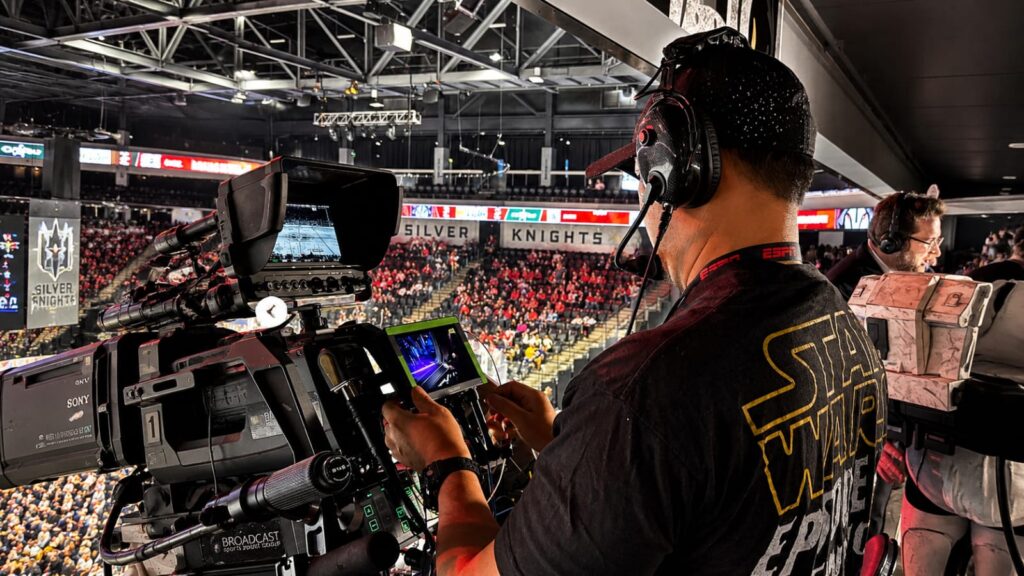
Broadcast rights, plus streaming arrangements, have become among the biggest money engines in modern hockey. National broadcasters and worldwide streaming platforms compete hard for live sports rights because hockey events tend to pull in consistent audiences. That matters a lot for ad sales, and for subscription growth too.
In Canada and the United States, long-term media agreements give leagues predictable revenue, which can lift franchise valuations and, in some cases, support league expansion plans.
Modern tournaments also spread their content across several channels rather than depending on one single broadcaster and you’ll now see national TV, regional sports networks, streaming apps, and direct-to-consumer platforms share the heavy lifting.
By distributing the games through multiple viewing routes, leagues can increase media income while also connecting with younger digital audiences around the globe, even if the audience habits change year to year.
Sponsorship Integration And League Structures
Corporate sponsorship has shifted a lot from simple billboard-style advertising inside arenas. Today, hockey brand partnerships often function like an integrated identity system spanning arenas, broadcast segments, digital media and social platforms.
From stadium naming rights and dasher-board placements, to jersey patches and branded highlight packages, leagues effectively treat almost every visible part of the viewing experience as commercial inventory.
Some newer hockey organizations have even tried a more centralized operating approach. The Professional Women’s Hockey League is one example, it uses centralized ownership and management for teams plus player contract handling. That structure helps the league negotiate unified sponsorship packages and keep brand messaging consistent across the competition.
And as professional hockey keeps evolving financially, the “business” layer of tournaments has started to matter almost as much as the actual games. Revenue diversification, media growth, and durable sponsorship frameworks are now key levers for keeping modern hockey strong at the highest level.
About the Author