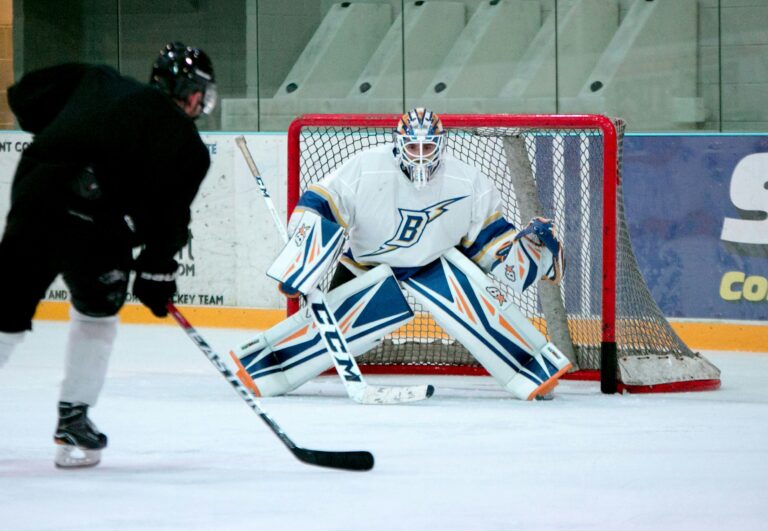

Image credit : @ron-lach via pexels.com
In the modern National Hockey League, judging an athlete’s “work ethic” has moved away from some handwritten scouting story into this more quantifiable data thing. With NHL EDGE puck and player tracking tech, teams can literally put numbers on physical effort like it’s exact, not vibes. So stuff like high-end endurance, relentless forechecking, and repeat explosive bursts are no longer just “character traits”; they’re more like measurable trends teams can evaluate closely.
As the 2026 Stanley Cup Playoffs drift into the Conference Finals, the tracking numbers keep pointing at a top-tier group of skaters whose nonstop physical output steadies everything for their clubs.
The Workhorse Standard: Quinn Hughes’ Conditioning Milestone
Sure forwards grab the spotlight with sudden short-distance spurts, but it’s usually the defensemen who grind out the most physical labor overall. Vancouver Canucks blueliner Quinn Hughes has become one of the clearest examples of elite endurance in today’s NHL. During extended playoff-style games and heavy-minute stretches, Hughes has consistently shown the ability to maintain skating efficiency deep into games without major drop-offs in pace or puck movement quality.
The deeper read on his underlying data suggests his skating efficiency doesn’t really sour as games wear on. His ability to handle massive ice-time workloads while still driving clean transition play makes him one of the league’s most reliable puck-moving defensemen and this cardio stamina means he can stack 30-plus minutes of high-intensity ice time in demanding situations, basically acting like a one-man transition engine for defensive-zone exits.
Explosive Repetition: Nathan MacKinnon and Cale Makar

In this fast, high-contact NHL, work ethic now also looks like a willingness to keep slamming into max velocity even when the body is under stress. Colorado Avalanche stars Nathan MacKinnon and Cale Makar are the measuring stick here and Makar has repeatedly shown elite straight-line skating ability and acceleration that places him among the fastest defensemen in hockey.
But top speed alone isn’t the full story. MacKinnon consistently ranks among the NHL’s most explosive skaters because of how often he attacks with pace shift after pace shift during a game. Getting a 200-pound frame up to elite speed again and again every shift, while also wrestling with heavy defensive pressure, means you need serious off-ice preparation and leg-drive endurance. It’s that whole package that ends up setting the new expectation for modern pro conditioning.
The Two-Way Engine: Brayden Point’s Spatial Workload
Modern forwards, the ones who actually create while also defending, have to juggle creativity with constant backtracking. Tampa Bay Lightning center Brayden Point basically represents that two-way, spatial type of workload. Tracking data and possession metrics regularly highlight Point as one of the NHL’s strongest transition forwards because of how effectively he helps sustain offensive-zone pressure while still recovering defensively.
Keeping offensive-zone control at a consistently high level isn’t casual at all. It suggests a player has to keep winning low-cycle battles along the boards, then immediately counter-press when possession flips. And he has to run a high-volume skating tempo to crack open passing lanes. Point’s ability to pin opponents down in their own zone looks like it comes straight from his nonstop, high-frequency stride rate, which slowly grinds down opposing defensive matchups over a full game cycle.
About the Author