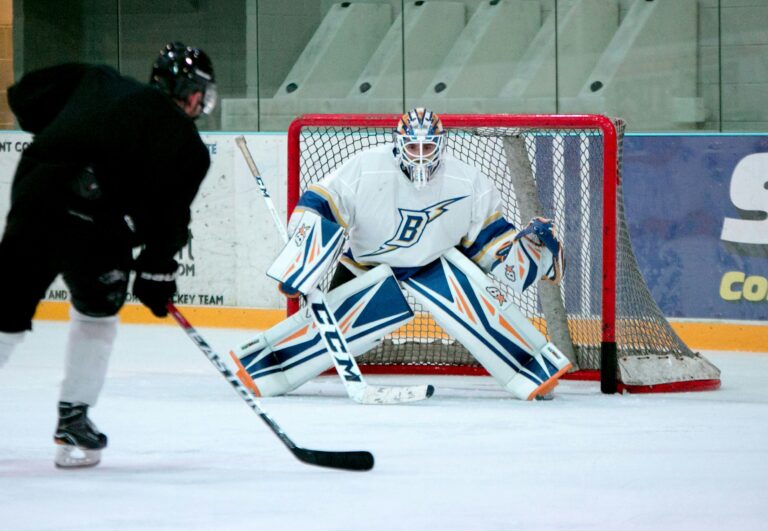

Image credit : @hockeywords via facebook
Over the last two decades, the structural landscape of the National Hockey League has shifted demographically and in a big way. In the past, the league leaned hard on Canadian major junior setups and European professional leagues, mainly for the talent pipeline. But lately the NHL has been turning more and more toward American grassroots programs. And with that, the United States went from being a “sometimes” exporter of elite talent into a major engine for NHL depth plus that star-powered aura.
The ADM Blueprint and Long-Term Athlete Development
The modern American surge is mostly rooted in the American Development Model, or the ADM, which USA Hockey rolled out in 2009. Before this overhaul, youth hockey in the U.S. often pushed early specialization, plus it leaned into high-volume competitive calendars and that came with a cost: fewer chances for real foundational skill work. The ADM tried to flip the script, pushing age-appropriate training and putting emphasis on station-based practice, small-area games, and cross-ice competition for younger players.
From an analytical angle, small-area games are designed to increase puck touches and force players to execute technical skills while everything feels tighter, like condensed space and faster timing. That practice environment, in turn, lines up with what the modern, high-tempo NHL wants: possession analytics, quick transitions and decision-making under pressure; when the grassroots system leans into multi-sport athleticism and cognitive choice-making instead of obsessing over immediate wins- it seems to lift the baseline technical ability of American skaters who later land in major junior or collegiate pathways.
The NCAA Pathway as an Elite Accelerator

Unlike the Canadian model, which depends heavily on the Canadian Hockey League, the American grassroots route is tightly connected to the NCAA. The college route gives a development edge: there’s typically a lower game-to-practice ratio, paired with more structured off-ice conditioning. That format helps prospects add the right physical mass and sharpen tactical judgment between roughly ages 18 and 22, which is a key period for physiological growth.
You can see the ripple effect in newer NHL Draft patterns, where American-trained collegiate players continue appearing regularly in the first round and a program like the National Team Development Program, the NTDP in Plymouth, Michigan, functions as a link between local youth leagues and NCAA hockey and the NTDP basically gathers top under-18 talent, then exposes them to international contests and intense training that speeds up the move toward professional tempo.
The Expansion of Non-Traditional Talent Hubs
One of the clearest grassroots wins is the way the talent base has broadened geographically. Sure, classic regions like Minnesota, Massachusetts, and Michigan still keep churning out NHL players. But non-traditional Sun Belt hubs- think California, Texas, Arizona, and Florida- have become major recruitment zones and this shift connects to the NHL expansion wave from the late 1990s, which helped seed local rink systems and youth academies even in places that were previously off the map for hockey.
Now, high-level NHL contributors from those areas have disrupted the old geographic monopoly and grassroots projects supported by local NHL franchises have lowered socio-economic hurdles in some markets. They help fund coaching certification tracks and provide ice-time subsidies, which supports competitive tier-1 youth groups. As a result, the modern NHL scout isn’t watching just one narrow stretch anymore. The American grassroots network has, in effect, broadened development so the league’s next generation of speed and skill is being built across the country, not only in a single corridor.
About the Author