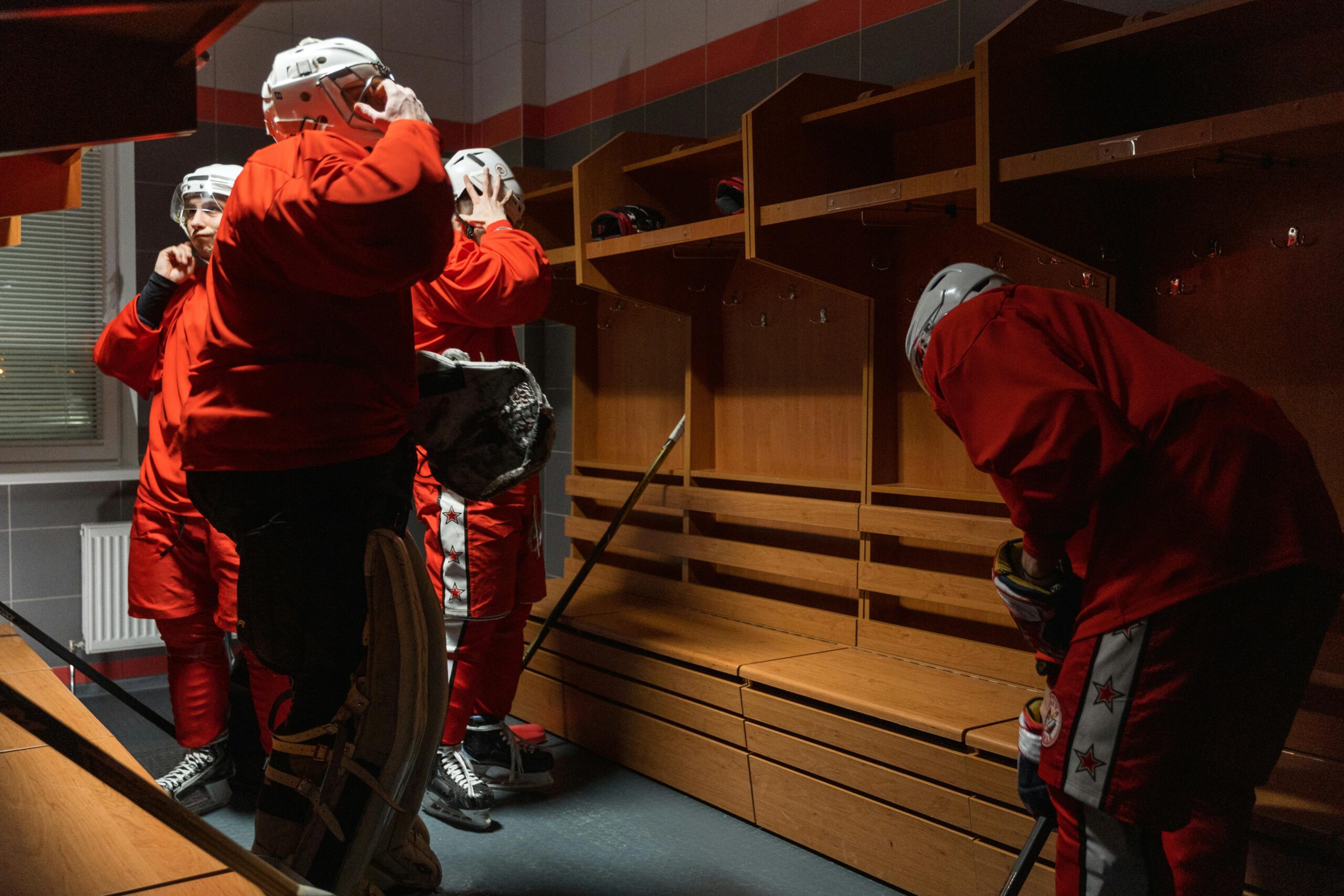
Image credit : @tima-miroshnichenko via pexels
Public opinion about a professional hockey player is mostly decided by those fast, high-impact shifts you can clearly see during that three-hour broadcast, but the real grind of staying elite across an 82-game regular season is really built on a very rigid, same-same daily rhythm. For current athletes, a normal game day becomes this stern routine about saving energy, getting the body “mechanically” ready, and logging physiological metrics, where each hour is basically managed to squeeze the best output into a 60-minute stretch of actual competition.
The Morning Preparation and Tactical Synching
The whole day kicks off at 7:30 a.m. with an aim toward immediate metabolic ignition. Then, players usually roll into the team facility by 8:30 a.m. to get early physical checks from the medical team, watching things like joint range and overall system fatigue. Food around this time is pretty standardized, focused on complex carbs and lean protein, to refill glycogen supplies that got lowered from travel or earlier training blocks.
By 9:30 a.m., they shift into the film room for tactical alignment. That means careful review of the opponent’s special teams tendencies, their neutral-zone pressure patterns, and even how exposed the goalie can get in certain situations. At 10:00 a.m., it’s time for the customary morning skate and this isn’t some full-blast practice, it’s more of a 20-to-30-minute, low-volume session, meant to lock in puck feeling, rehearse the quick transition sequences, and fine-tune for the local ice temperature. Some veteran players will sit out the on-ice part and instead do solo stick work, or they choose off-ice mobility and dynamic stretching, just to conserve physical resources.
The Midday Reset and Cognitive Decompression

Media duties often follow right after the skate, so players have to speak to reporters before they move into the second recovery stretch. Around 12:30 p.m., athletes take a heavy pre-game meal, historically stuff like chicken and pasta, though now sports nutrition has gone broader, with very specific macronutrient distributions matched to each player’s metabolic needs.
The early afternoon is basically for head clearing and body recovery. Between 1:30 p.m. and 4:00 p.m., there’s a required nap window, which has become a staple across international hockey cultures. Sleep here matters a lot for reducing the circadian disruptions from late-night commercial trips, time zone jumps, and those elevated cortisol levels that can show up after evening games.
The Pre-Game Activation and Game Execution
Players come back to the arena by 5:00 p.m., exactly two and a half hours before puck drop, to start a second activation phase. This part is full of personal rituals, from taping stick blades, to running quick team soccer-style games in the hallways, all to wake up the central nervous system and keep reaction time sharp. Then at 6:15 p.m. there’s a short, final discussion with the coaching staff to confirm the structural game approach, after which players suit up completely for warmups at 7:00 p.m.
The evening ends in the game, a three-hour stretch where players cycle through aggressive 45-second shifts that demand top anaerobic output. Once the final horn hits, the routine doesn’t just “stop” athletes jump straight into post-game recovery: stationary cycling to help clear lactic buildup, active cold-water immersion, and a quick calorie intake intended to start muscle repair. By midnight, the routine almost rewinds itself as they board the team bus or charter flight, prepared to repeat that same structured template again the next morning.
About the Author