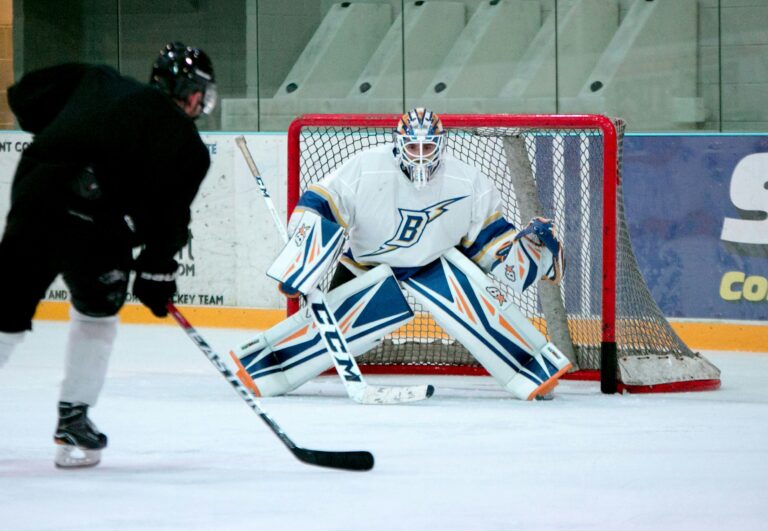

Image credit : @ron-lach via pexels.com
The whole deal with international hockey has moved way beyond the usual video review stuff and those basic box scores, now it’s more like a data-driven thing, dictated by real-time analytics, you know. Over the 2025–26 season, the use of tracking sensors plus automated officiating has shifted everything, coaches now strategize with it, officials manage games differently, and front offices basically look at athletic performance through a more measurable lens. In a way, it’s like the tech replaced that old scouting hunch with numbers and it also seems to push the game along faster, and more accurately too.
Puck and Player Tracking via Microchips

At the center of it all is tracking sensors embedded in player equipment and inside the puck. The system captures high-frequency positional data multiple times per second, so every little movement on the ice gets turned into a bunch of concrete metrics. Instead of only checking post-game film, coaches can get live info on bench tablets about skater velocity, stride efficiency, and even maximum shot speed during active shifts.
Because of that tracking, teams have leaned hard into newer metrics like Expected Goals (xG), zone-entry tracking, and possession metrics. By using those exact spatial coordinates, especially defenders’ distance and positioning relative to the puck, models can estimate the probability that a shot will actually land in the net, in real time. That means between periods, coaching staffs can make tactical shifts immediately, for example changing breakout patterns when the data suggests an opponent is really shutting down certain passing corridors, or lanes, before it even becomes obvious.
Automated Officiating and Video Umpire Systems

Technology has also reshaped the rule side of hockey. It’s not just “extra cameras” anymore, it’s more about refined Video Umpire setups and micro-camera arrays. In top-level international events, blue lines and goal lines are monitored using synchronized high-frame-rate camera systems that assist officials with offside and goal-line reviews. This setup almost wipes out human error on fast plays, when the puck seems to enter then exit the net in the blink of an eye, basically milliseconds.
On top of that, smart-glass tracking lets officials inspect complicated physical fouls with sharper clarity. Some player-safety and research systems can estimate collision impact forces using sensor-assisted tracking data, so departments focused on player safety can separate a clean, legal body check from something illegal, like a reckless head-targeting hit. Some fans and purists still say these interruptions mess with the match’s rhythm. Still, video review systems have helped reduce major officiating errors in recent international tournaments.
The Analytical Impact on Training and Roster Construction
Then there’s the off-ice side of things, where continuous biometric data collection has basically reshaped sports medicine and how long players stay effective. Teams increasingly use wearable performance technology in training and recovery environments to monitor metrics such as heart rate variability and workload, then training staffs get actionable alerts before a soft-tissue injury becomes a real problem. If performance metrics decline noticeably, teams can adjust workload and recovery plans to reduce injury risk. The whole goal is to protect the roster for the intense push of a postseason run.
Overall, this tech shift means modern hockey is less “just guts and endurance” and more like a chess match being run from digital dashboards. For front offices, these tools give objective benchmarks that can reduce emotional bias in contract talks and draft decisions. And it’s that consistently analytical standard, not just the occasional stat, that many people think will define the sport for years, maybe decades
About the Author