Image credit : @Patrik Månsson via facebook
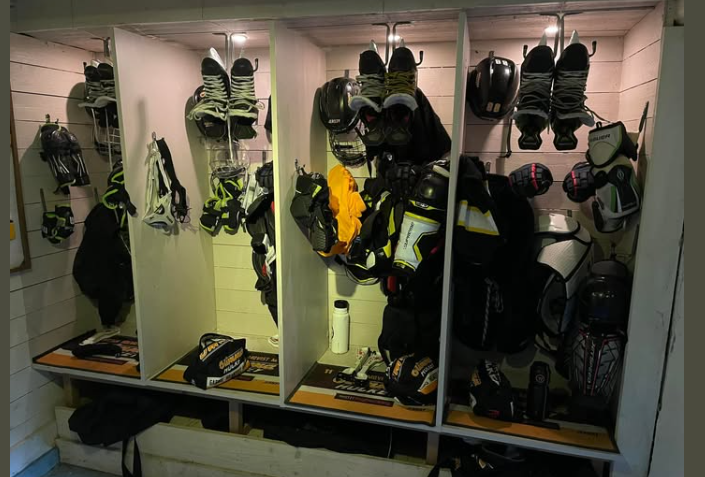
While head coaches sort out the tactical systems and star athletes steal the multi-million-dollar spotlight, the basic structure of a professional hockey franchise depends on this quiet crew of specialists and the team equipment manager ends up acting like the master mechanic of a high-speed operation, running a relentless, around-the-clock logistical web with almost no room for error. From micro-calibrating skate blade hollows to coordinating huge gear transportation chains, their exactness influences a roster’s on-ice safety and even whole-body performance.
In recent years, modern sports science plus aggressive safety rules have turned the locker room into this hyper-controlled technical workshop and when you actually look at the hidden, high-stress jobs these backstage people do, you get this picture of a relentless 24-hour push toward mechanical perfection, not just during games, but constantly.
The Advanced Chemistry of Blade Geometry and Micro-Tuning
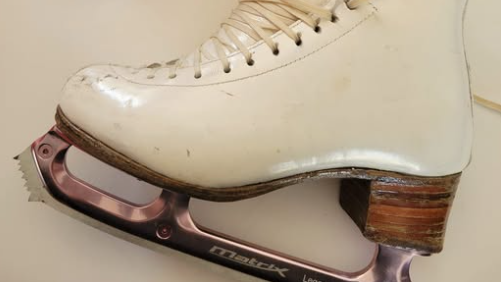
The main technical battleground for an equipment manager usually sits right on the steel runners attached to a player’s skates. Skate sharpening is not just a generic, hands-on craft anymore, it’s a specialized science tuned down to the millimeter. Managers have to keep a distinct profile for every skater on the roster, matching the specific radius of hollow (the groove depth carved into the center of the blade) with a player’s body mass, skating style, and even real-time ice conditions.
And it’s not “set it once and done” either. During demanding game stretches, the tuning often shifts based on player preference and ice conditions. A power forward who leans on heavier, straight-line acceleration needs a blade geometry that contrasts with what a nimble, mobile defenseman wants, especially if they rely on sharp lateral edge work and fast pivoting, if an elite player, loses an edge mid-period, the equipment manager has to perform a quick blade swap in under thirty seconds, using quick-release trigger systems, so the athlete gets back to the ice without skipping a crucial shift.
Navigating the Logistics of Massive Road Matrix Operations
The workload tied to an 82-game season is a massive logistical challenge, and it lands directly on the equipment staff’s shoulders. When a franchise starts one of those multi-city road trips, managers oversee the secure packing, loading, and tracking of more than three tons of specialized cargo. That inventory web covers hundreds of custom-molded sticks, replacement skate steel, protective pads, industrial skate-sharpening machines, and a lot of medical recovery equipment too.
The stress spikes hard during back-to-back games in different towns and while players board a charter flight to rest and recover, the equipment crew immediately loads up a cargo truck, heads to the next arena in the dead of night and starts getting the visiting locker room ready before dawn and every jersey has to be hung perfectly, every skate sharpened with care and every stick taped just right before the athletes even step inside, so the whole setup feels seamless and no travel chaos disrupts rhythm.
Enforcing the Geometry of Rigorous Safety and Gear Mandates
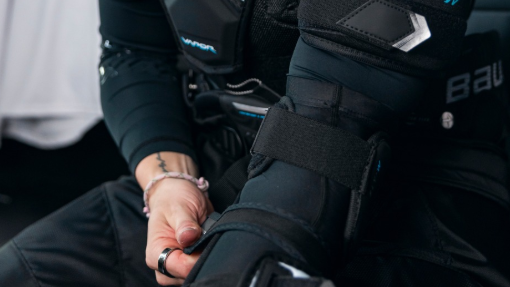
Beyond performance customization, modern equipment managers also act like first-line enforcers for league regulations and player safety procedures. Because the sport keeps moving toward a newer safety paradigm, these staffs are directly responsible for making sure all gear matches updated league mandates. That includes the large-scale distribution of cut-resistant neck protection and specialized wrist liners intended to guard athletes against severe skate-blade lacerations.
At the same time, the equipment staff has to handle the micro-measurement matrix enforced by league operations. Goaltending gear gets measured carefully by league officials to confirm pads and blockers do not exceed approved anatomical boundaries. Equipment managers must constantly cross-check their inventory against the league’s geometric baselines; otherwise teams can face penalties or league discipline for non-compliant equipment. And still, the mission stays the same: keep the roster properly armored for elite sports physics, even when the pace gets brutal.
About the Author