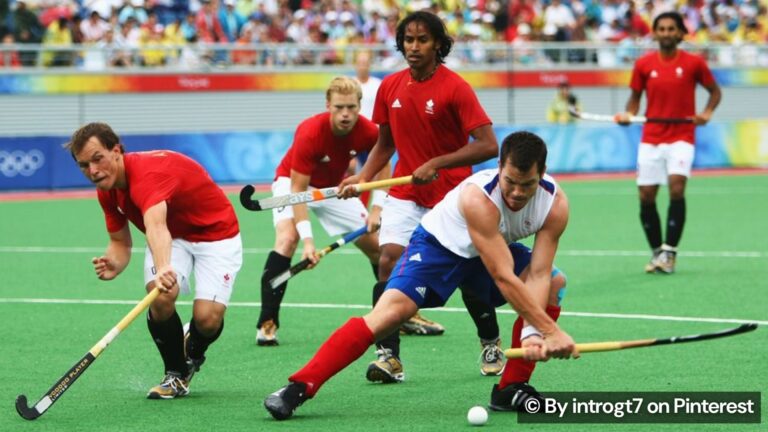

Image credit : eurokidsindia.com
The story of hockey is kind of loaded with a few athletes whose pull went way past what you’d see in stats. They didn’t only shine at the sport, they sort of re-wrote how it works, how teams think tactically, and even how fans talk about it.
From the “Wizardry” vibe of the Indian pitches to the “Greatness” of the North American ice, these figures behaved like real architects of the modern match, fixing new benchmarks that still get treated as the normal in 2026 for professional breakdowns.
Dhyan Chand: The “Wizard” Who Defined Field Hockey’s Golden Era
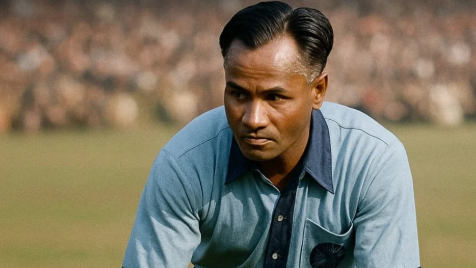
Way before synthetic turf became a regular thing, Major Dhyan Chand laid down a map for tight stick handling in field hockey. His effect was so heavy that in the 1936 Berlin Olympics German papers put it down as “magic”, and there were officials who reportedly checked his stick, just to see if there were hidden magnets or something. Chand was also the center of an Indian side that grabbed three straight Olympic golds 1928 then 1932 then 1936, and in that stretch India looked basically unbeatable to the rest of the world.
Even beyond his verified tally of more than 400 international goals, Chand’s true footprint is in how he thought through situations. He popularized what’s often called the “Indian Dribble” a close control method where players could swing direction at serious speed without losing the ball. That small looking shift in how the ball is carried meant opponents had to leave behind brute force approaches and lean toward more skill driven defensive patterns. In the 2026 lens of sports history, Chand still shows up as the main reason field hockey became more about finesse, not only about endurance.
Bobby Orr: The Defensive Shakeup of the 1970s
In ice hockey, nobody changed a position more cleanly than Bobby Orr did. Before Orr’s arrival with the Boston Bruins in 1966, the defenseman job felt mostly like waiting , reacting and staying home. Orr flipped that into an offensive force, he was the first defenseman to win the NHL scoring title, capturing the Art Ross Trophy in both 1970 and 1975 a feat that has never been repeated by a blueliner. When he pushed out of the defensive zone and drove the rush, he basically reshaped the “transition game” that now shows up everywhere in modern NHL planning.
Orr’s legacy can be measured with that run of eight straight Norris Trophies, given to the top defenseman in the league. His career reads like a textbook for “active defense,” because he used quick skating plus sharp reads to steer the tempo. Even in 2026, analysts keep naming Orr as the ancestor of the “modern mobile defenseman” and you can see today’s stars like Cale Makar compared to the Orr standard set back in the 1970s.
Luciana Aymar: The Global Icon of Women’s Field Hockey
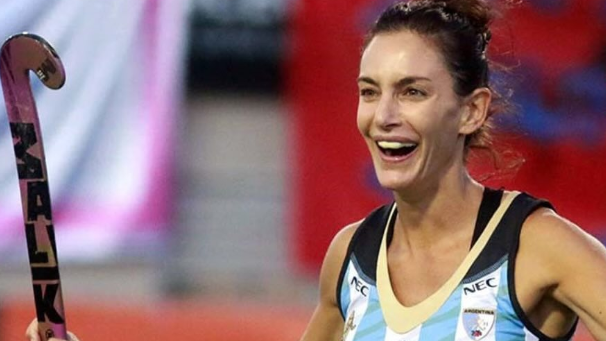
Argentina’s Luciana Aymar, nicknamed “La Maga” or “The Magician,” occupies a rare spot in the sport’s timeline as the only eight time FIH Player of the Year and Aymar brought this mix of stage like flair and athletic exactness to the women’s game that felt new and unusually sharp. She could break down entire defensive units almost alone, and because of that Argentina turned into a world class machine, with theLas Leonas collecting two World Cup crowns, four Olympic medals, and a staggering six Champions Trophy titles.
Aymar’s influence mattered a lot for the commercial and professional lift of women’s hockey. She raised visibility by showing that one player’s individual brilliance could carry both the marketing force and the competitive weight of a whole national program. Her effect still shows up in the 2026 international scene, where “creative playmaking” plus fast high tempo dribbling are treated like core ideas that trace right back to her decade-long stretch of dominance across the top tier world stage.
About the Author