
Image credit : @NHL, @nhlmedia and @thehockeynews via facebook
As the 2026 Stanley Cup Playoffs start shifting from those local divisional matchups over toward the Conference Finals, the tracking info NHL EDGE shared has shown up a pretty weird streak of statistical anomalies. Normally the postseason grind slows transition speed, and it also tends to mute offensive finishing. Yet the numbers through May 18 show a sharp break from the old patterns, and it seems to be pushed by individual athletic outliers plus this league-wide jump in high-danger conversion results.
The 23.92 mph Threshold: Cale Makar’s Skating Blueprint

The biggest single-player marker this month wraps around Colorado Avalanche defenseman Cale Makar. He hit a max skating speed of 23.92 mph. And, based on tracking database records that go back to 2021–22, that’s the fastest velocity a defenseman has ever logged in Stanley Cup Playoffs history. But it’s not only a positional “best”… it’s the absolute top skating speed tracked across all NHL skaters in the entire 2026 postseason, tying the forward peak Connor McDavid set in late April of 2025.
Tactically, the tracking notes point right at how deep Colorado’s transition system really is. Makar is currently leading all active defensemen with four separate speed bursts that each clear the 22 mph threshold. That kind of structural speed lets Colorado mess with their neutral-zone breakout rhythm, so opponents have to slide their defensive pairings deeper into the zone, just to shut down off-the-rush chances. Even with the physical pressure coming from divisional opponents, that high-velocity metric is basically why Colorado stays a legit transition threat.
The High-Danger Equilibrium: Frederik Andersen’s Unprecedented Save Efficiency

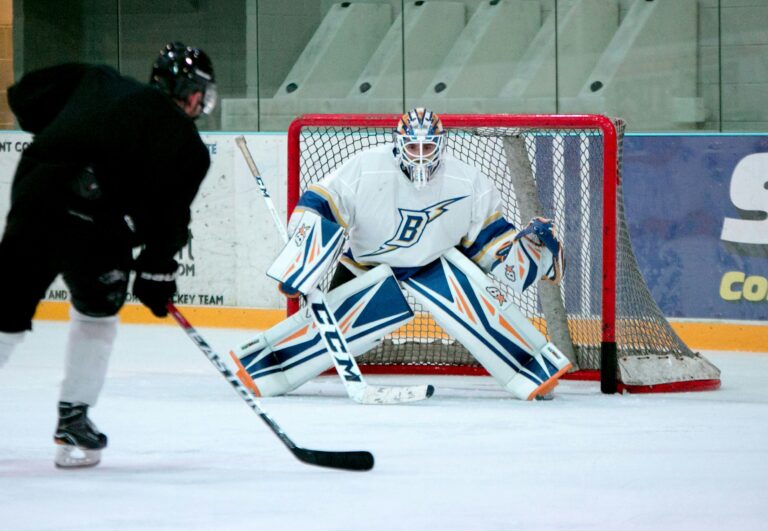
Where Colorado is leaning on speed to scramble the map, the Carolina Hurricanes are changing the defensive expectations through goaltending performance and veteran keeper Frederik Andersen has built a modern postseason benchmark, posting a .918 high-danger save percentage across eight appearances. For reference- the league average high-danger save percentage during the 2026 playoffs sits around .827, so Andersen is stopping premium looks at nearly a 10% higher rate than the baseline you’d expect.
The outlier vibe gets even stronger if you isolate specific game situations. At 5-on-5 even strength, Andersen’s overall save percentage climbs to .970. And in “5-on-5 close” moments, he’s at a perfect 1.000 save mark, which means tied games, or games within one goal, during late-game segments. That netminder efficiency lines up with why Carolina has started the postseason 8–0, even though they’re getting out-possessed in the offensive zone at times.
An Era of Offensive Volatility and Elimination Durability
At the bigger picture level, the 2026 Second Round has basically refused to act like that old-school defensive traffic jam everyone expects in late-spring hockey. Teams are averaging 6.6 goals per game total, which is the second-highest scoring pace in the second round of any postseason during the last thirty years. And the scoring spike isn’t happening alone; there’s also been a noticeable jump in resilience during elimination scenarios.
That showed up hard with Buffalo Sabres captain Rasmus Dahlin; he became the first defenseman in NHL history to post a five-point game (one goal and four assists) while his team was facing elimination and he then helped orchestrate a seven-goal unanswered stretch against Montreal- forcing a decisive Game 7.
Taken together, these metrics suggest modern hockey has moved into a phase where physical tracking output links directly to tactical production. With historic individual milestones mixed alongside systemic offensive “lurchiness,” the remaining rounds are likely to keep pushing against the usual postseason playbook.
About the Author